


Key Takeaways:
- Choosing properly fitted equipment and a qualified coach can help children feel more comfortable and learn safely as they try a new sport.
- Staying hydrated, warming up before exercise and recognising early signs of injury can help children develop safer training habits.
- Getting enough sleep, eating balanced meals, and allowing time for recovery are important for children balancing sports with school and other activities.
- Encouraging effort rather than focusing on performance helps children build confidence, enjoy learning new skills and develop a positive relationship with sports.
Children’s interests can change quickly. One week, your child might want to play football. The next, they could ask about swimming, badminton, or martial arts. Before signing them up or buying equipment, it helps to make a few preparations so their first training session goes smoothly.
The aim is simple: help your child feel comfortable, learn safely and enjoy the experience enough to want to return.
1. Choose equipment that fits properly
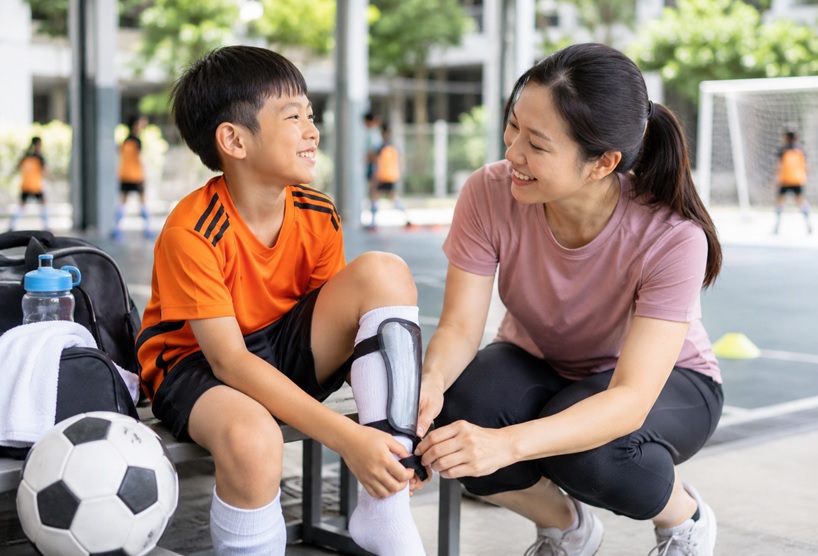
Children grow quickly, so buying slightly oversized sports equipment might seem practical. However, protective gear that doesn’t fit properly may be less effective, and uncomfortable equipment can make training harder than it needs to be.
Start by asking the coach or sports centre what your child needs. Depending on the sport, this could include suitable shoes, helmets, shin guards, mouthguards, goggles or racquets.
Let your child try everything on before their first session. Shoes that pinch or a helmet that keeps slipping can distract them when they should be concentrating on learning.
2. Find out who will coach your child
The right coach can make a real difference to your child’s first experience of a sport. Beyond teaching skills, they should help beginners feel comfortable, encourage teamwork and know when children need extra support.
Ask about the coach’s qualifications, experience with children and class sizes. It is also worth finding out how they introduce beginners to new skills and handle differences in ability.
During the first few sessions, observe how the coach interacts with the group. Instructions should be clear, activities should suit the children’s ages, and everyone should receive appropriate supervision. If your child consistently seems overwhelmed or uncomfortable, speak with the coach.
3. Bring enough water and prepare for the weather
Children can become so absorbed in playing that they forget to drink water. Pack a filled water bottle and remind your child to take regular water breaks, even when they do not feel particularly thirsty.
Singapore’s heat and humidity can make outdoor training especially tiring. Choose lightweight, breathable clothing and check whether the coach provides shaded breaks during longer sessions.
Teach your child to recognise when they need a break. If they feel dizzy, nauseous or unusually weak, they should stop exercising and tell an adult immediately.
4. Get your child into the habit of warming up
Children may be eager to start playing immediately, but a warm-up helps prepare their muscles and joints for physical activity.
Simple movements such as light jogging, arm circles and gentle mobility exercises can help them ease into training. Coaches may also include sport-specific movements, such as passing drills before football or footwork exercises before badminton.
If your child practises at home, encourage the same habit. They should start with easier movements before attempting faster, more demanding exercises.
5. Help them recognise when something is wrong
It is normal for children to feel tired or experience some muscle soreness after trying a new activity. However, sharp pain, swelling or difficulty moving a joint should never be dismissed as part of training.
Younger children may struggle to explain exactly what hurts. Watch for signs such as limping, favouring one arm or suddenly becoming reluctant to participate.
Encourage your child to tell their coach whenever something hurts. Continuing through an injury could make it worse, so stopping and seeking medical attention when necessary is always the better approach.
6. Make room for rest and recovery
Between school, homework, tuition and other activities, children’s schedules can become surprisingly busy. Adding sports training without allowing enough downtime may leave them feeling exhausted.
Make sure your child gets sufficient sleep, eats regular, balanced meals and has opportunities to rest between demanding sessions.
Pay attention to how they feel throughout the week. If they seem unusually tired, irritable or less enthusiastic about training, consider whether their schedule needs adjusting.
You don’t need to fill every free afternoon with practice. Children can improve their skills while still having time to relax and enjoy other interests.
7. Let their confidence grow naturally
Some children settle into a new sport immediately. Others need time to understand the rules, develop coordination or feel comfortable around unfamiliar teammates.
Avoid comparing your child’s progress with others’. Instead, recognise small improvements, such as learning a new movement, following instructions or having the confidence to ask questions.
After each session, ask what they enjoyed and whether anything felt difficult. These conversations can help you understand how they are adjusting without making every training session feel like a performance review.
Most importantly, let them enjoy being beginners. They don’t need to excel immediately for it to be worthwhile.
8. Consider personal accident protection
Even with suitable equipment, experienced coaches and sensible precautions, accidents can still happen during sports or everyday activities.
For parents reviewing their family’s financial arrangements, personal accident insurance may be worth considering alongside existing protection.
If you plan to buy accident insurance, take time to understand the coverage, conditions, and exclusions before choosing a policy. When comparing a personal accident plan, consider how it fits with the insurance your family already has.
Income’s PA Assurance is one option families can explore when reviewing their personal accident protection needs, subject to the policy’s terms and conditions.
Give your child a positive start to sports
Your child’s first training session does not have to be perfect. They might miss a few passes, struggle with a new technique or need time to make friends. What matters is that they feel supported and comfortable enough to keep trying.
A little preparation can help. With the right equipment, good coaching, healthy routines, and encouragement from home, children can discover what they enjoy at their own pace.
As your family takes on new activities, it may also be a good time to review your existing protection. Speak to an Income Insurance advisor to find out more about Income’s PA Assurance and whether it may suit your family’s needs.